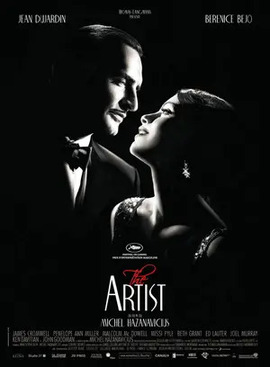
The Artist: Jean Dujardin's Award-Winning Portrayal of a Fading Star
In an era dominated by CGI, explosive action, and intricate dialogues, one film Jean Dujardin elevated to international stardom dared to do the unthinkable: it went silent. The Artist, released in 2011, captivated critics and audiences alike by transporting them back to the golden age of Hollywood's silent era. At its heart was the extraordinary performance of French actor Jean Dujardin as George Valentin, a beloved silent film star navigating the tumultuous transition to talkies. His portrayal was not merely an act; it was a profound study of human pride, vulnerability, and the relentless march of time, earning him an Academy Award for Best Actor and cementing his place in cinematic history.
The Canvas of Silence: Reimagining Early Hollywood
From its opening frames, The Artist announces its audacious premise: a contemporary film shot in black and white, nearly devoid of spoken dialogue, beginning its narrative in 1927. This bold artistic choice, masterminded by director Michel Hazanavicius, isn't a gimmick but a deliberate homage, a love letter to the foundational years of cinema. It's a breath of fresh air precisely because of its commitment to looking back, making it unique in the modern landscape.
In a medium where words are largely absent, the film's score becomes a character in itself. Taking center stage, the music masterfully sets the mood, whether it's playful, dramatic, or mournful. It guides the audience through every emotional beat, compensating for the lack of spoken words with rich melodies and poignant harmonies. This reliance on non-verbal storytelling extends to every aspect of the production.
Hazanavicius employs various visual devices to convey the narrative and character emotions. A dramatic staircase can signify a rise or fall, sinking quicksand visually represents George's deteriorating circumstances, and a trampled film poster powerfully illustrates the fleeting nature of fame. These techniques don't just tell the story; they immerse the viewer in the visual language of silent cinema, reminding us of the immense power of purely visual communication. This artistic courage forced actors, most notably Dujardin, to rely solely on their facial expressions, physicality, and innate charisma, showcasing their raw talent in a way few modern films demand.
George Valentin: A Portrait of Pride and Persistence
The arc of George Valentin, as brought to life by Jean Dujardin, is the emotional core of The Artist. At the story's inception, Valentin is at the zenith of his career, a matinee idol whose films are adored worldwide. His off-screen charisma and playful antics are front-page news, painting a picture of a man utterly at home in his celebrity. It's in this heady atmosphere that he inadvertently sparks the career of an aspiring starlet, Peppy Miller (Berenice Bejo), a chance encounter that begins their intertwined destinies.
As the "talkies" arrive, threatening to upend the film industry, Valentin embodies the resistance of many silent stars to the new medium. His pride, a defining characteristic, prevents him from adapting. He clings to his legacy, famously declaring, "I don't need a voice; I have a face!" This stubborn refusal leads to his dramatic downfall. Dropped by his studio, Kinograph, he pours his personal fortune into self-financing his own silent feature, Tears of Love. Its disappointing reviews and financial returns, compounded by the devastating stock market crash, leave him utterly broke, his star fading into obscurity.
Dujardin's performance in this descent is nothing short of magnificent. Without uttering a single word for much of the film, he conveys George's simmering anger, despair, and eventual desperation through subtle shifts in his expressive eyes, the slump of his shoulders, and the way he holds himself. We witness his gradual loss: his wife, his loyal chauffeur Clifton (James Cromwell), and his palatial home. Peppy Miller, now a huge talkie star, attempts to help him, but his immense pride initially compels him to refuse her charity. Dujardin's ability to elicit profound empathy for this flawed, proud man is a testament to his acting prowess. His Oscar win for Best Actor was a direct acknowledgement of this nuanced, deeply human portrayal.
A Symphony of Nostalgia: Crafting The Artist's World
The Artist is not just a film about the silent era; it's a cinematic conversation with it. Director Hazanavicius draws heavily on the rich tapestry of classic Hollywood, infusing his creation with influences from iconic films and figures. The most evident homages are to Billy Wilder's Sunset Boulevard, with its poignant depiction of a forgotten silent star, and Stanley Donen's vibrant Singin' in the Rain, which joyously tackles the same technological transition. Yet, The Artist doesn't merely copy; it reimagines, offering a fresh perspective while honoring its predecessors.
The film is replete with specific references that delight cinephiles. Mentions of legendary stars like Douglas Fairbanks and Jean Harlow, or the inclusion of a charismatic dog reminiscent of Asta from The Thin Man, weave a rich tapestry of cinematic history. The fictional studio, Kinograph, echoes famous monikers like Biograph, grounding the narrative in an authentic, albeit imagined, past. Every detail, from the period-accurate costumes and elaborate sets to the nuanced character archetypes, is meticulously crafted to transport the audience into the vibrant world of 1920s Hollywood.
This careful blend of historical accuracy and creative interpretation is what makes The Artist so compelling. It taps into a collective nostalgia for a bygone era of glamour and artistry, yet tells a timeless story of change, resilience, and the enduring power of human connection. For more on this captivating blend, explore Nostalgia Reimagined: Jean Dujardin's The Artist and Classic Hollywood.
The Resonance of a Timeless Performance
Jean Dujardin's performance as George Valentin transcended cultural and linguistic barriers, speaking to the universal themes of fame, loss, and redemption. His natural charisma, honed through years of comedic roles, proved to be a formidable asset, allowing him to portray Valentin's initial charm and later, his tragicomic struggle. The subtle shifts from boisterous confidence to quiet despair were delivered with exquisite precision, making George Valentin a deeply sympathetic figure despite his flaws and obstinance.
The critical acclaim for Dujardin was immediate and widespread. After premiering at Cannes, where he won the Best Actor award, his momentum carried through the awards season, culminating in a Golden Globe, a BAFTA, and ultimately, the coveted Academy Award for Best Actor. This recognition was not just for the technical challenge of acting in a silent film but for the profound emotional depth he brought to the character. He mastered the unique physicality and exaggerated expressions of the silent era without ever descending into caricature, maintaining a delicate balance between homage and authentic human emotion.
Beyond the accolades, Dujardin's portrayal contributed significantly to the film's broader success, exceeding even the highest expectations. His ability to anchor such an unusual project with a compelling, charismatic, and heartbreaking performance was key to its triumph. The Artist stands as a powerful reminder that compelling storytelling and exceptional acting can transcend technological advancements, proving that sometimes, the most innovative path forward is to look back.
In conclusion, the film Jean Dujardin spearheaded, The Artist, is a testament to the enduring power of cinema and the timeless artistry of performance. Dujardin’s award-winning portrayal of George Valentin is a masterclass in silent acting, showcasing an actor's ability to convey a spectrum of human emotion without uttering a single word. It’s a film that not only celebrates the magic of early Hollywood but also tells a deeply human story of pride, fall, and the possibility of a second act, leaving an indelible mark on cinematic history and solidifying Jean Dujardin's status as an international star.